Why are multiply driven nets a hard structural concern?
From PDVerse PnR Interview Handbook · pdVerse Mentor Guide
Short Answer
Multiple active drivers can make a net functionally ambiguous unless an intentional bus or tri-state model explains them.
Technical Explanation
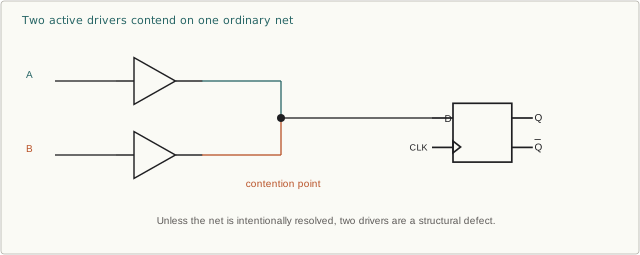
Two active drivers on one ordinary net can demand different logic values at the same time. That is why a multiple-driver message deserves immediate structural review.
What To Check
• Warning sign: Two outputs drive one signal after a merge or stale ECO. • Inspect: Start with one named object in the report and trace it to the netlist, library, or SDC statement that created it. • Correct: Return the logical defect to synthesis/RTL ownership or restore the approved tri-state modelling, then rerun structure checks.
Command Checks & Actions
• check_netlist: reports structural connectivity problems

Run the commands in order. Each line answers a separate part of the check.
Healthy, Suspicious & Hard-stop Results
• Expected: Multiple active drivers can make a net functionally ambiguous unless an intentional bus or tri-state model explains them. • Investigate: Two outputs drive one signal after a merge or stale ECO. • Stop before floorplanning when required logic or timing coverage is missing or unexplained. Return the logical defect to synthesis/RTL ownership or restore the approved tri-state modelling, then rerun structure checks.
Common Mistake
Do not assume the check passed just because ICC2 continued: Two outputs drive one signal after a merge or stale ECO. Fix or narrowly justify the named objects, then rerun the same command.
What The Interviewer Is Testing
Be ready to explain why this matters before floorplanning: Two outputs drive one signal after a merge or stale ECO.
Practical Example
Symptom: Two outputs drive one signal after a merge or stale ECO. Corrective path: Return the logical defect to synthesis/RTL ownership or restore the approved tri-state modelling, then rerun structure checks.
Continue practising