Low-Power Physical Design

Low Power Library

Learn low-power architecture, UPF implementation, verification, and multivoltage signoff through focused guides and interview practice.

New · Low Power Basics Premier

Learn low power from first principles

Nine mentor-style chapters spanning power fundamentals, standard cells, memories, activity, architecture, implementation, UPF, and CPF.

Need tool implementation details? The practical 11-chapter UPF and implementation guide is also available. Get the complete guide for ₹99 ↓

₹299₹179Full 9-chapter bundle
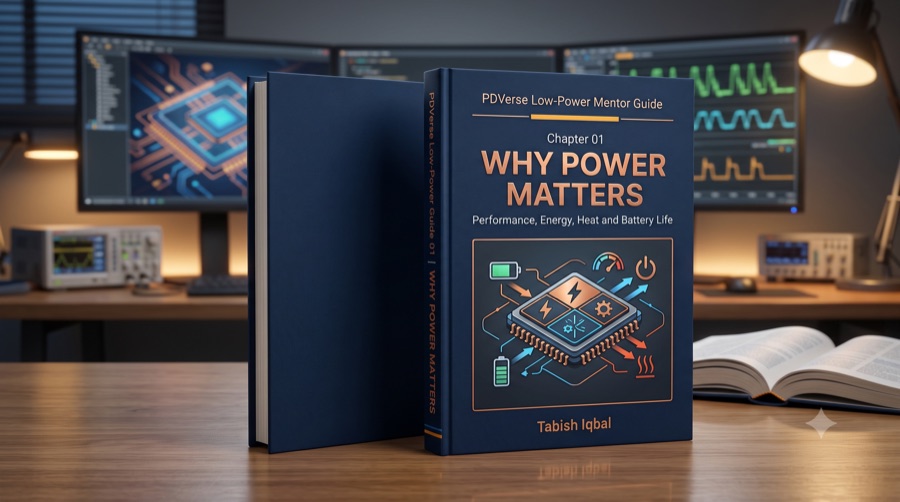
Low Power Basics Premier Chapter 01: Why Power Matters
Chapter 01 · 24 pages₹29

Why Power Matters

Understand where chip power goes, why it limits modern designs, and how engineers reason about power from architecture to silicon.

  • Dynamic, leakage, and short-circuit power
  • Power, energy, and thermal limits
  • Battery life and performance trade-offs
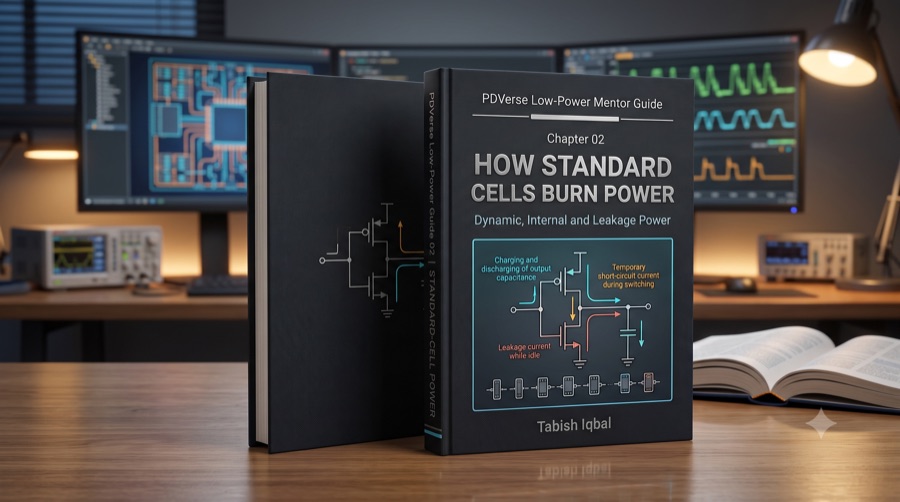
Low Power Basics Premier Chapter 02: How Standard Cells Burn Power
Chapter 02 · 46 pages₹29

How Standard Cells Burn Power

Build transistor-to-cell intuition for switching, internal, leakage, and clock-network power.

  • CMOS switching behaviour
  • Cell internal and leakage power
  • Clock-tree power and sizing trade-offs
Low Power Basics Premier Chapter 03: Memories, Macros and I/Os
Chapter 03 · 37 pages₹29

Memories, Macros and I/Os

Learn why SRAMs, hard macros, interfaces, and off-chip loads need their own power strategy.

  • Memory and macro power modes
  • I/O and interface power
  • Macro-level estimation and controls
Low Power Basics Premier Chapter 04: Turning Activity Into Power
Chapter 04 · 47 pages₹29

Turning Activity Into Power

Connect toggles, capacitance, voltage, and frequency to realistic power analysis inputs and reports.

  • Activity factors and toggle data
  • Vectorless and vector-based analysis
  • Reading and questioning power reports
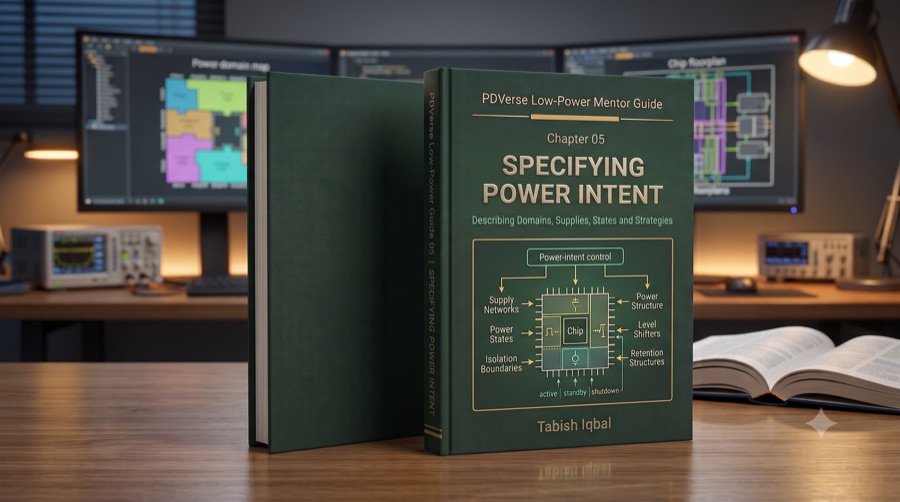
Low Power Basics Premier Chapter 05: Specifying Power Intent
Chapter 05 · 50 pages₹29

Specifying Power Intent

Translate architectural power decisions into domains, supplies, states, and low-power strategies.

  • Power domains and supply relationships
  • Isolation, retention, and level shifting
  • Power-state intent and verification
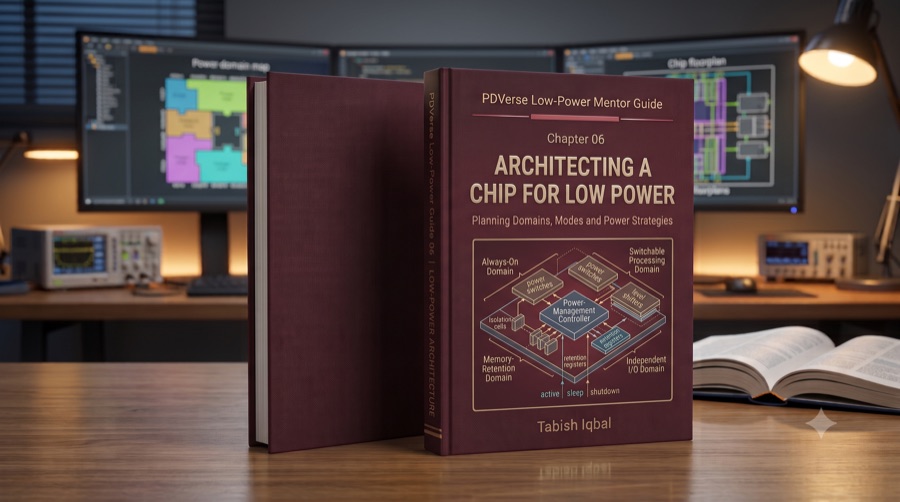
Low Power Basics Premier Chapter 06: Architecting a Chip for Low Power
Chapter 06 · 47 pages₹29

Architecting a Chip for Low Power

Choose architectural techniques that reduce power before implementation choices become expensive.

  • Clock and power gating
  • DVFS and voltage partitioning
  • Always-on and retention planning
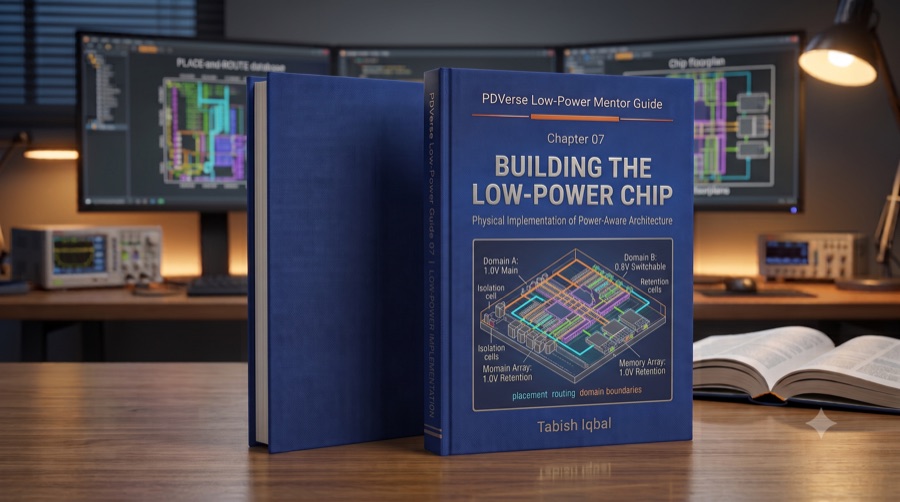
Low Power Basics Premier Chapter 07: Building the Low Power Chip at Implementation Time
Chapter 07 · 49 pages₹29

Building the Low Power Chip at Implementation Time

Carry low-power intent through floorplanning, placement, CTS, routing, optimization, and signoff.

  • Voltage-area implementation
  • Special-cell placement and checks
  • Power-aware closure and signoff
Low Power Basics Premier Chapter 08: Describing Power Intent in UPF
Chapter 08 · 52 pages₹29

Describing Power Intent in UPF

Learn how IEEE UPF represents supplies, domains, strategies, power switches, and legal operating states.

  • Core UPF objects and commands
  • Strategy definition and mapping
  • Power states and implementation checks
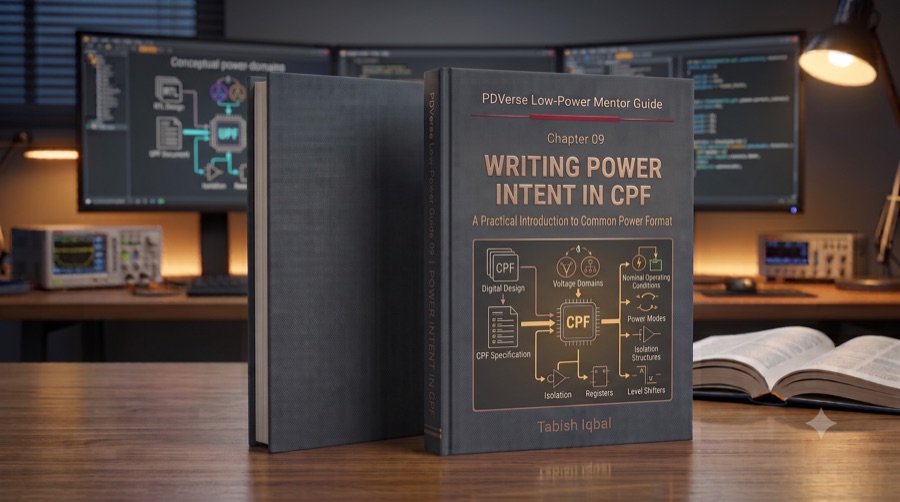
Low Power Basics Premier Chapter 09: Writing Power Intent in CPF
Chapter 09 · 60 pages₹29

Writing Power Intent in CPF

Understand the CPF view of domains, modes, isolation, retention, and power-switching intent.

  • CPF objects and hierarchy
  • Power modes and low-power rules
  • CPF versus UPF mental models

Explore Low Power Tool Guide

Download all 11 chapters

Get the complete practical handbook covering low-power fundamentals, UPF authoring, implementation, verification, and signoff.

Low Power Basics PremierNow available →

₹199₹99

Chapter Library

Low Power Tool Guide

Eleven focused chapters arranged in implementation order, included together in the ₹99 complete guide.

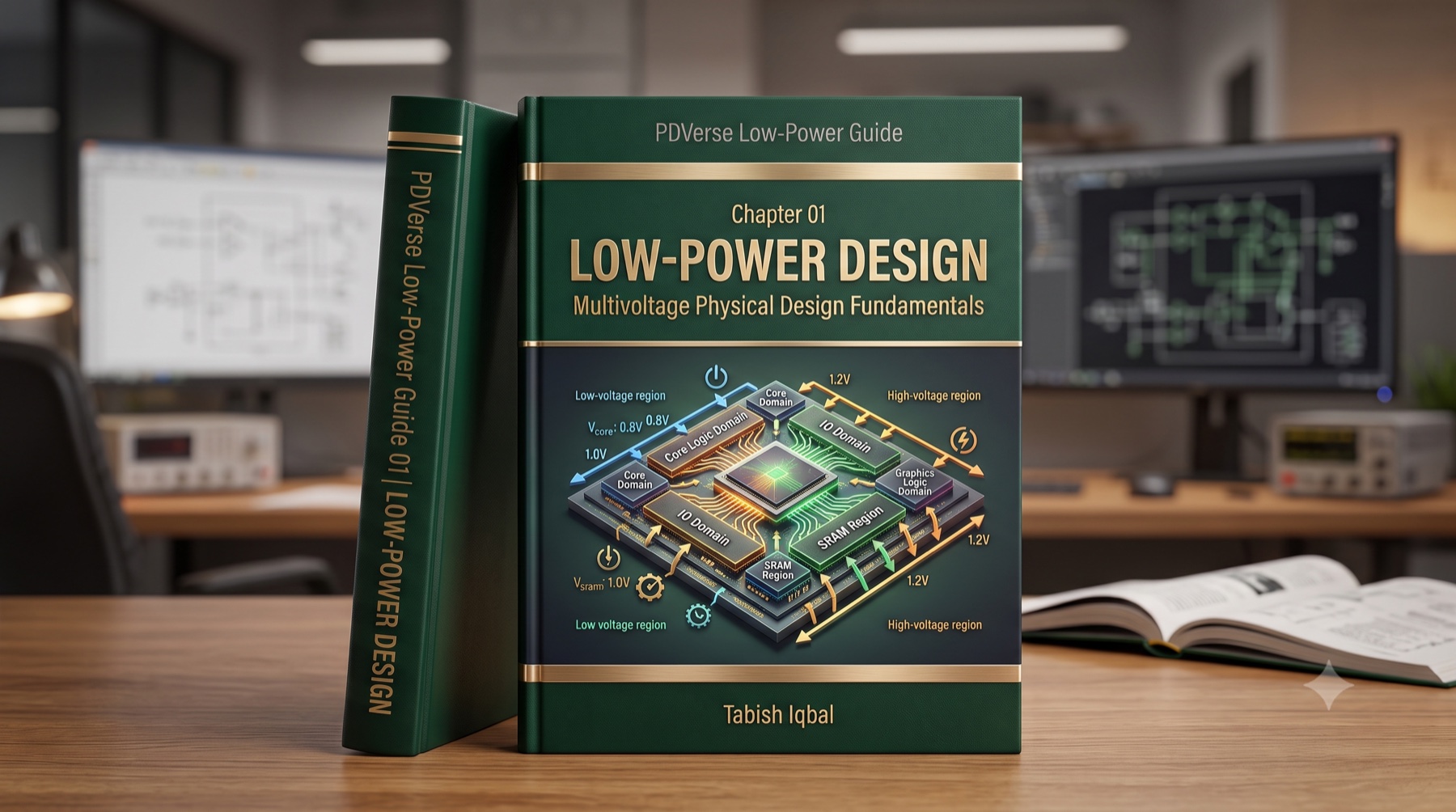
Chapter 01: Low Power and Multivoltage Fundamentals
Chapter 01 · 12 pages

Low Power and Multivoltage Fundamentals

Build the foundation for low-power physical design and understand why modern chips need multiple voltage and power modes.

  • Dynamic power and leakage power
  • Voltage scaling and power gating
  • Multivoltage chip architecture
  • Low-power implementation flow
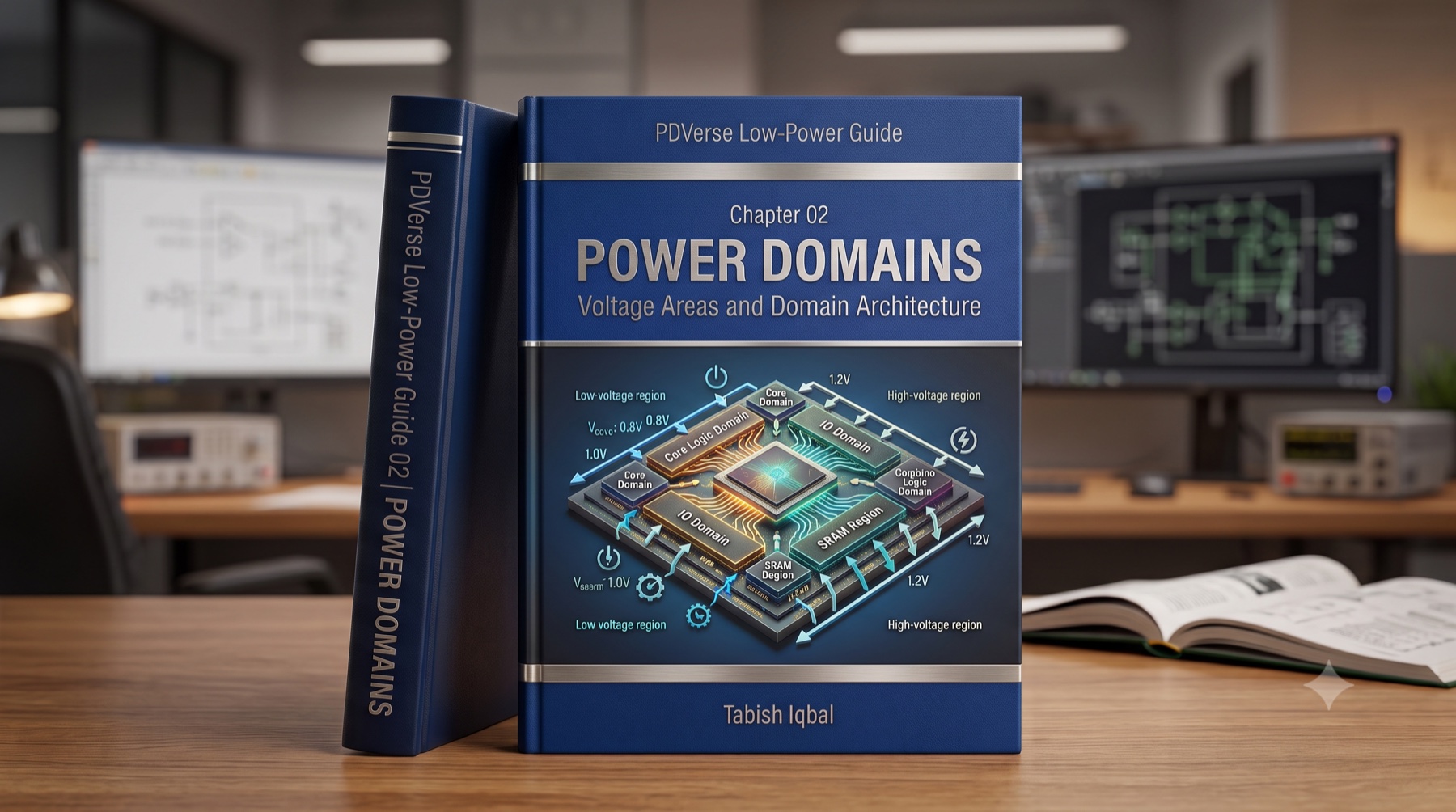
Chapter 02: Power Domains, Voltage Areas and Supply Architecture
Chapter 02 · 11 pages

Power Domains, Voltage Areas and Supply Architecture

Learn how logical power partitions connect to physical voltage areas and the chip supply network.

  • Power domains and hierarchy
  • Voltage-area planning
  • Primary and always-on supplies
  • Logical-to-physical intent
Chapter 03: Power Intent and UPF Fundamentals
Chapter 03 · 9 pages

Power Intent and UPF Fundamentals

Translate a low-power architecture into clear, tool-readable Unified Power Format intent.

  • UPF scope and hierarchy
  • Core UPF objects
  • Supply relationships
  • Loading and early checks
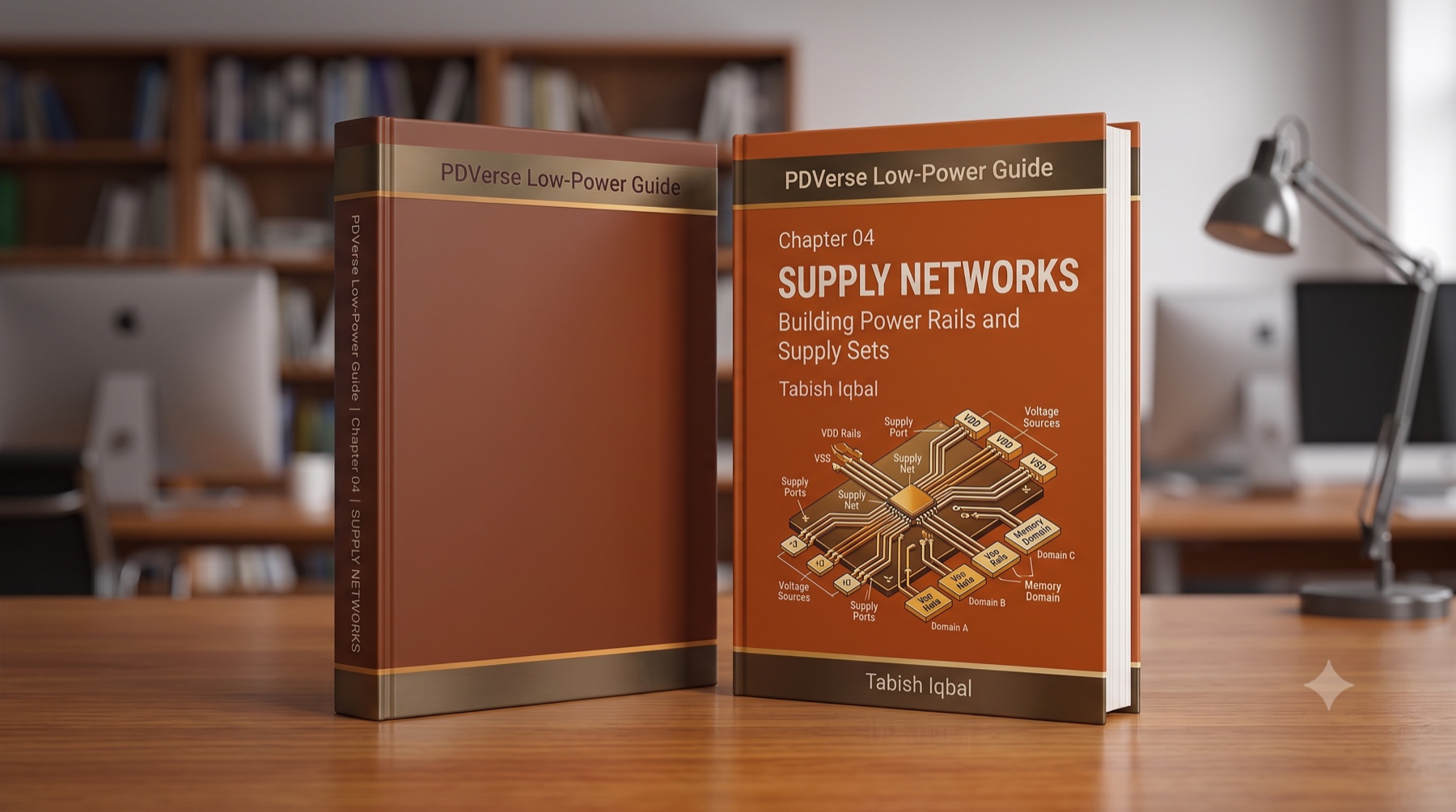
Chapter 04: Building the Supply Network in UPF
Chapter 04 · 13 pages

Building the Supply Network in UPF

Construct a complete supply model that implementation and verification tools can understand.

  • Supply ports and nets
  • Supply sets and functions
  • Primary supply assignment
  • Port and power states
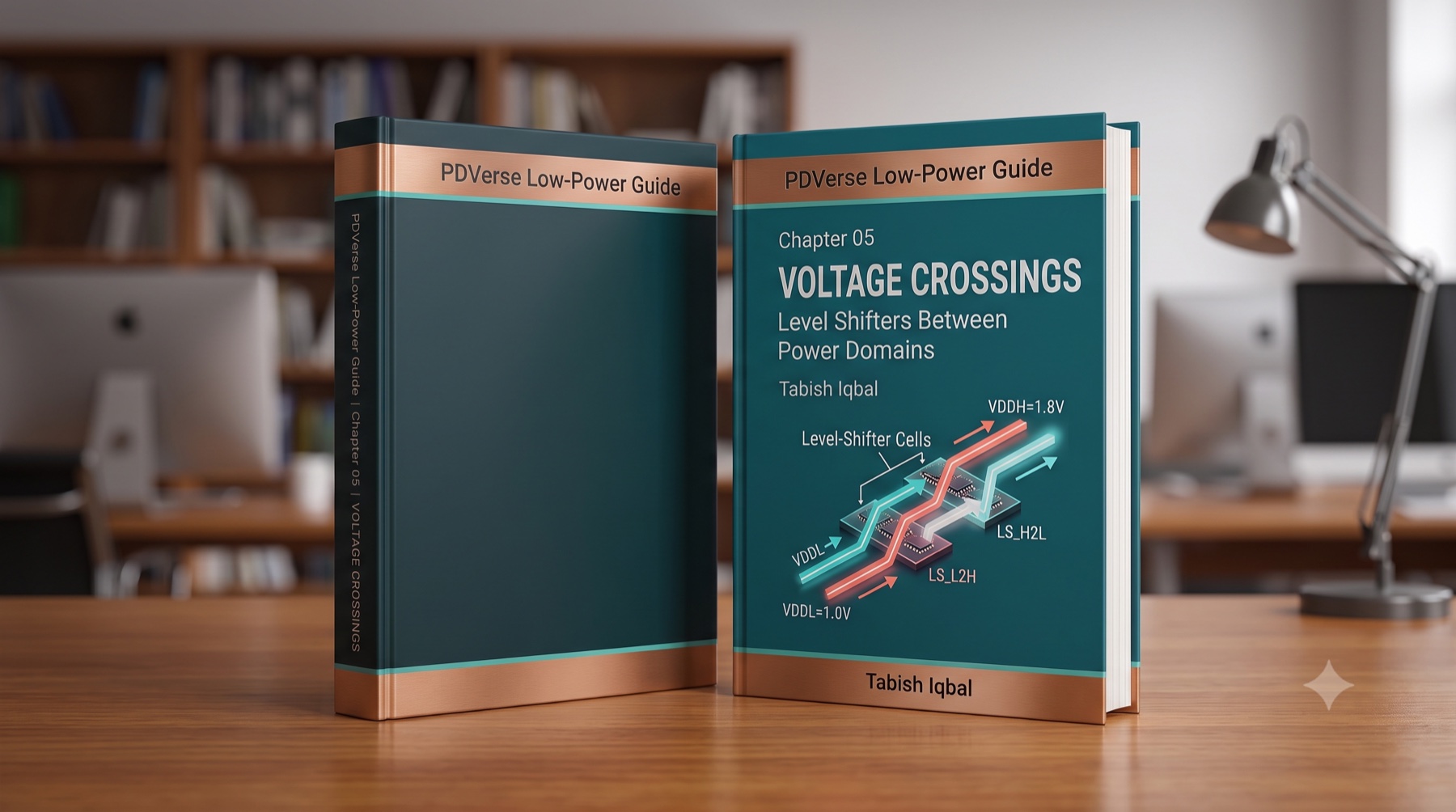
Chapter 05: Voltage Crossings, Level Shifters and Isolation
Chapter 05 · 12 pages

Voltage Crossings, Level Shifters and Isolation

Protect signals that cross voltage boundaries or leave a domain that can shut down.

  • Low-to-high and high-to-low crossings
  • Level-shifter strategies
  • Isolation clamps and controls
  • Placement and library mapping
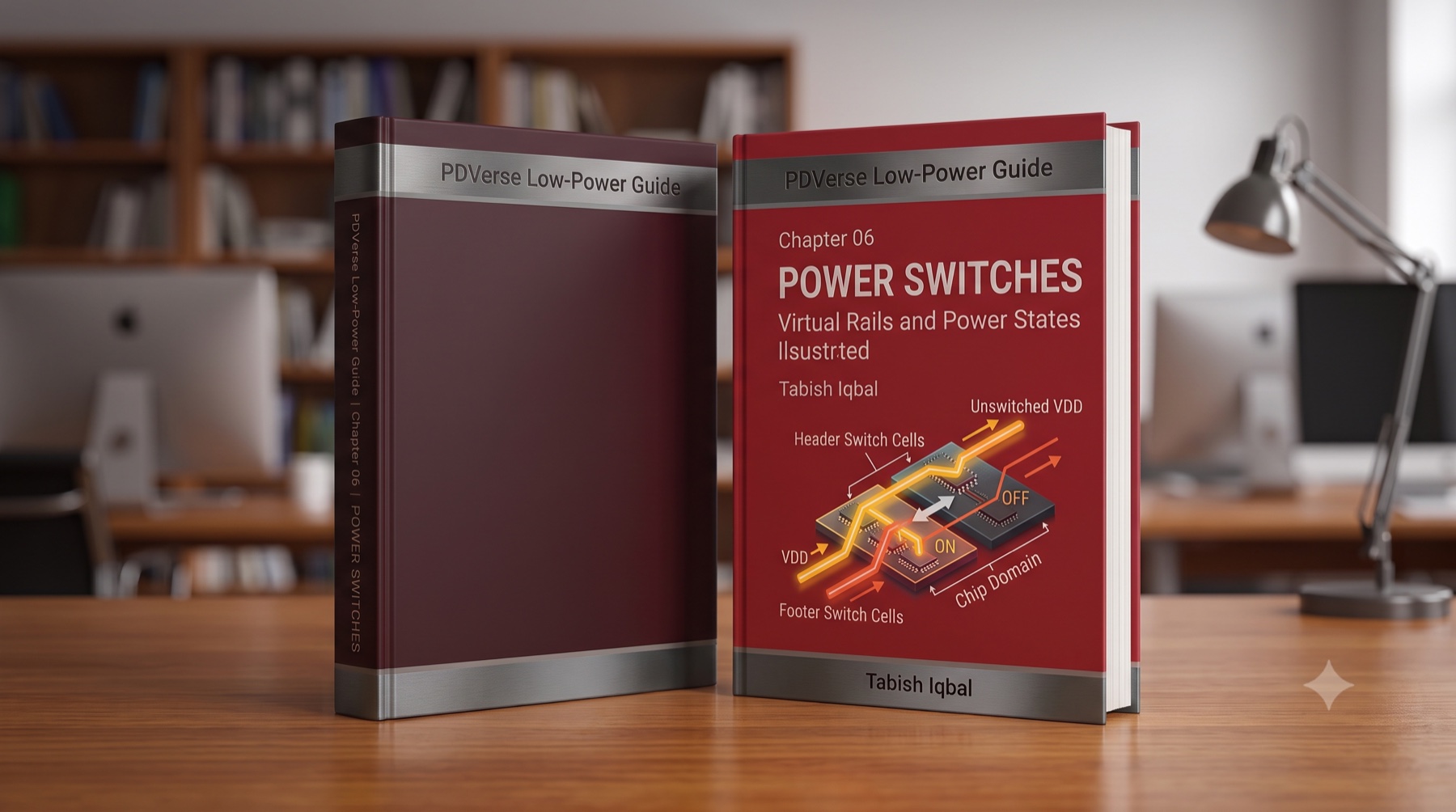
Chapter 06: Power Switches, Virtual Rails and Power States
Chapter 06 · 12 pages

Power Switches, Virtual Rails and Power States

Model switchable supplies and define how a power-gated domain moves between legal operating states.

  • Header and footer switches
  • Virtual supply rails
  • Switch controls and sequencing
  • Legal domain power states
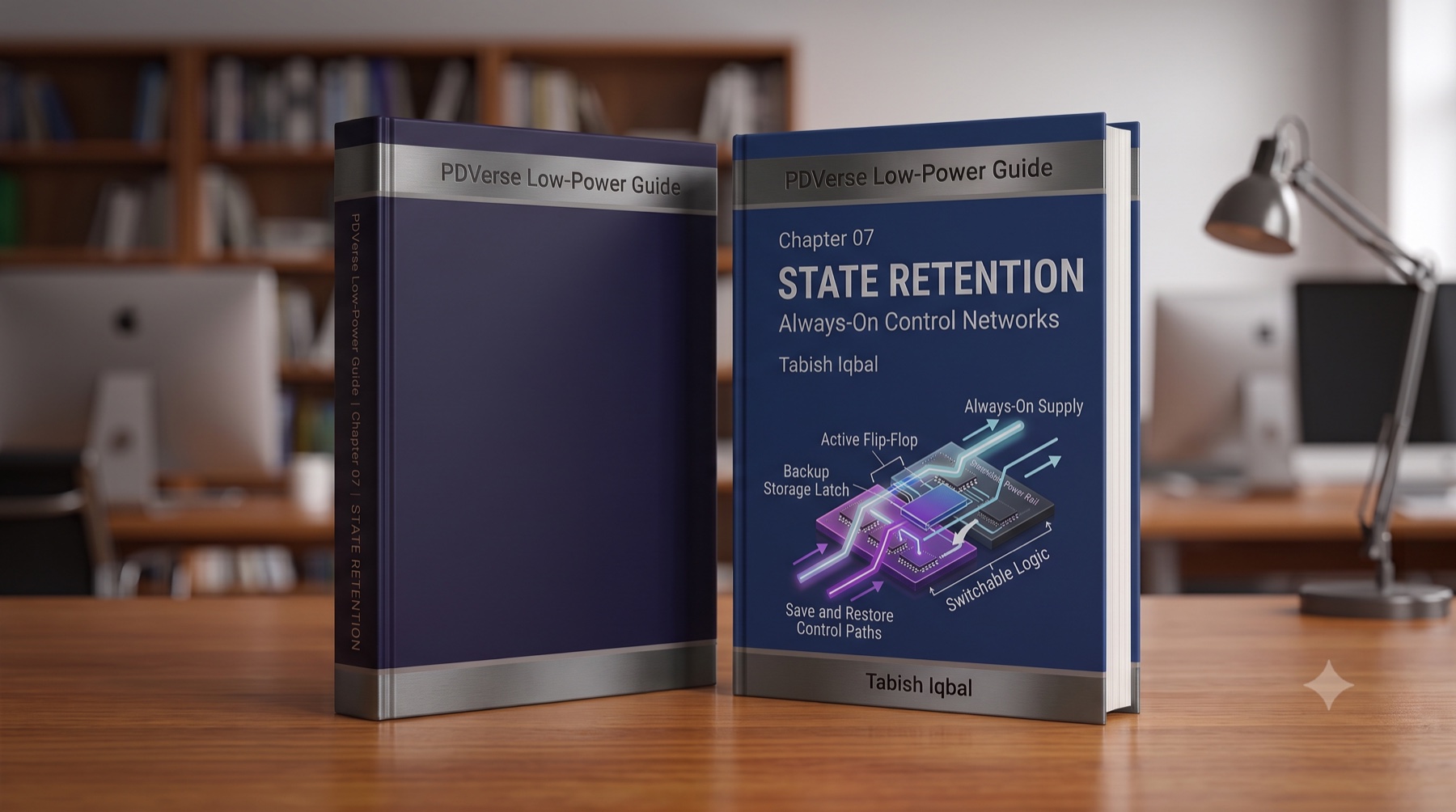
Chapter 07: State Retention and Always-On Control Networks
Chapter 07 · 12 pages

State Retention and Always-On Control Networks

Preserve critical register state and keep essential control paths alive during shutdown.

  • Retention strategies
  • Save and restore sequencing
  • Retention supply planning
  • Always-on cells and buffers
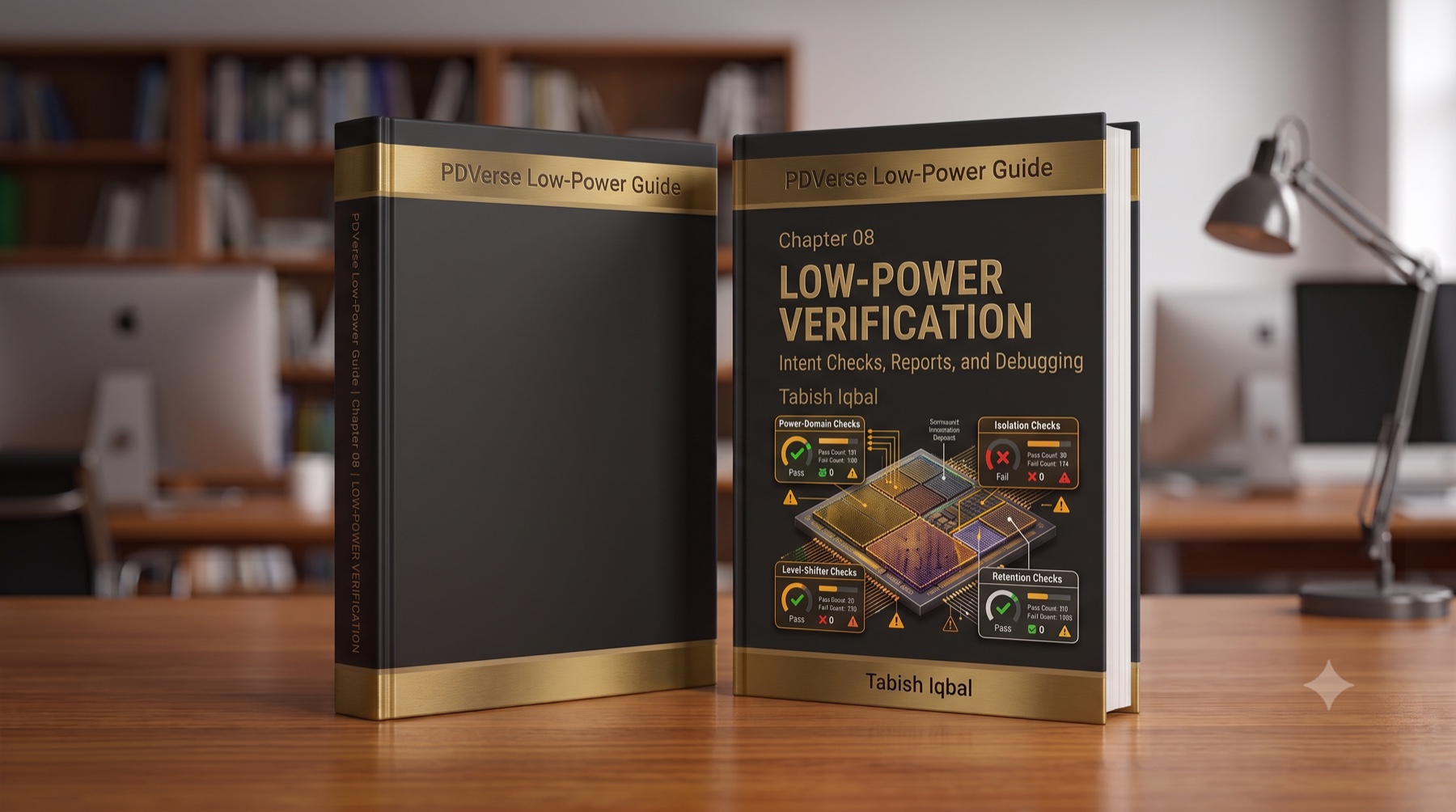
Chapter 08: Power Intent Verification and Debugging
Chapter 08 · 10 pages

Power Intent Verification and Debugging

Find UPF problems early and debug the most common multivoltage implementation failures.

  • Structural UPF checks
  • Strategy and mapping failures
  • Supply connectivity debug
  • Multivoltage reports
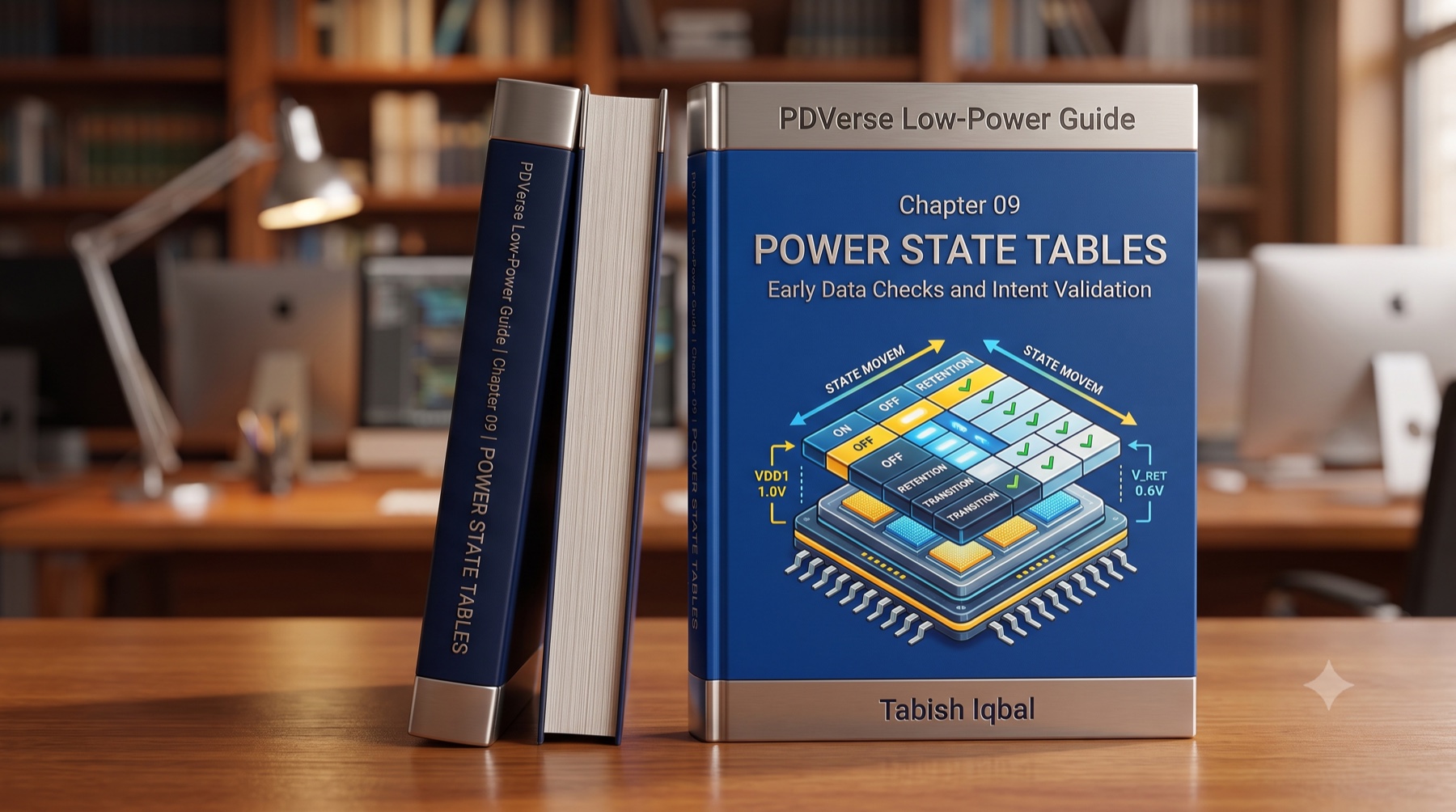
Chapter 09: Power State Tables, Early Data Checks and Signoff Readiness
Chapter 09 · 10 pages

Power State Tables, Early Data Checks and Signoff Readiness

Describe legal system modes and build evidence that the low-power design is ready for signoff.

  • Power-state tables
  • Legal operating combinations
  • Early design-data checks
  • Signoff-readiness review
Chapter 10: Well Biasing, Advanced UPF and Final Signoff
Chapter 10 · 11 pages

Well Biasing, Advanced UPF and Final Signoff

Extend the power-intent model and close advanced electrical, physical, and verification requirements.

  • Well and bias supplies
  • Advanced UPF relationships
  • Physical implementation checks
  • Final low-power signoff
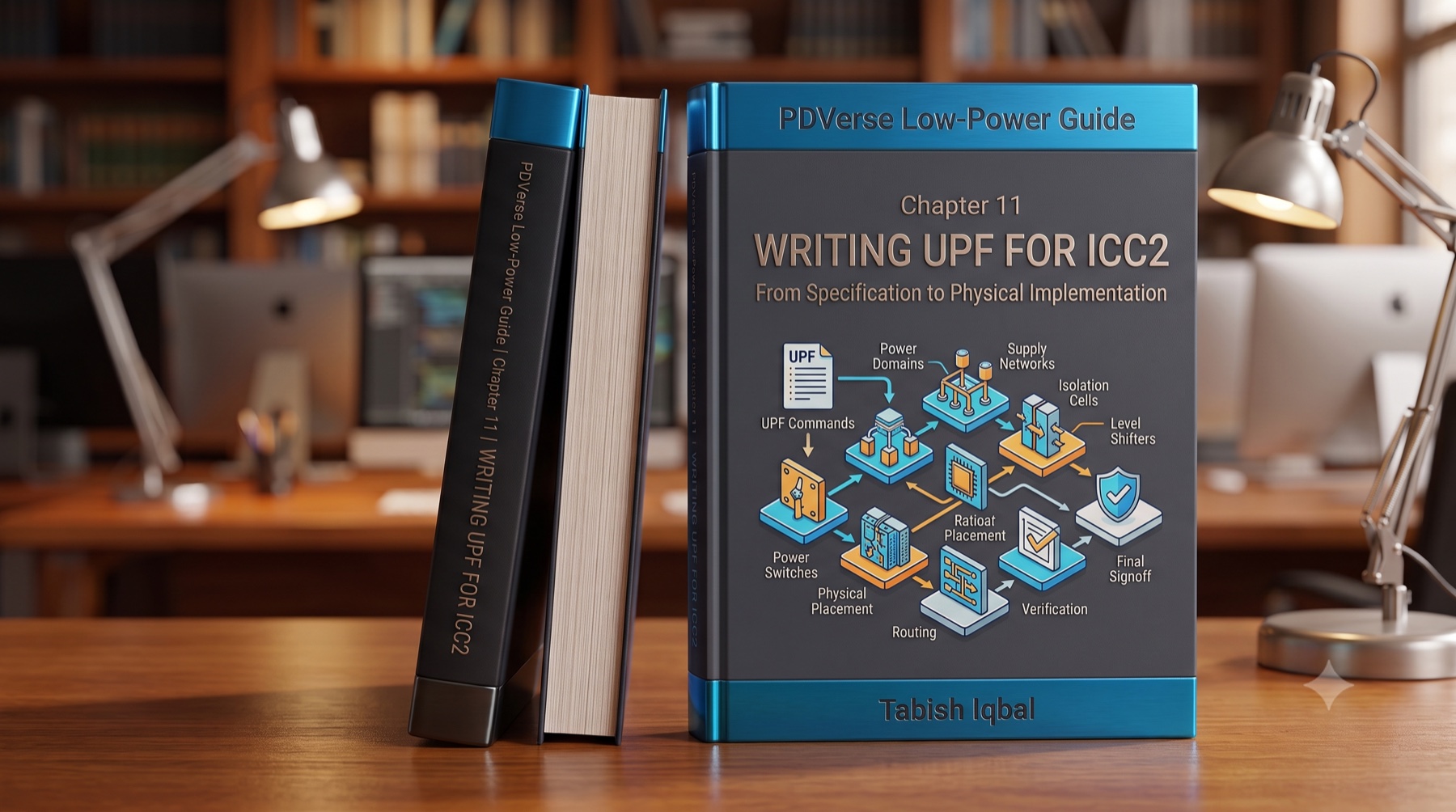
Chapter 11: Writing UPF for ICC2 From Scratch
Chapter 11 · 18 pages

Writing UPF for ICC2 From Scratch

Follow a practical ICC2-oriented example from architecture through UPF creation and implementation checks.

  • Create domains and supplies
  • Define low-power strategies
  • Add power states
  • Run ICC2 checks and reports