What does check_timing check at this stage?
From PDVerse PnR Interview Handbook · pdVerse Mentor Guide
Short Answer
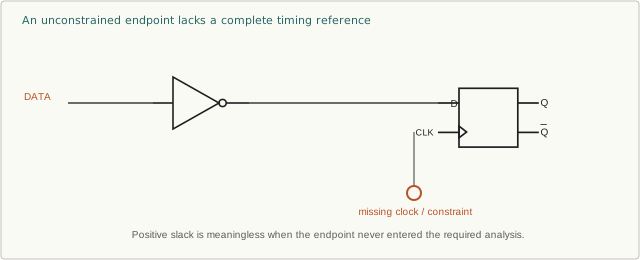
It diagnoses missing or inconsistent timing setup such as no-clock points, unconstrained endpoints, loops, generated-clock issues, and other selected categories.
Technical Explanation
check_timing is a coverage and setup-health report. It looks for timing intent that is missing or inconsistent before you celebrate slack.
What To Check
• Warning sign: Ordinary timing reports look clean because problematic paths never entered analysis. • Inspect: Start with one named object in the report and trace it to the netlist, library, or SDC statement that created it. • Correct: Run defaults first, add relevant named checks deliberately, classify every finding, and rerun after correction.
Command Checks & Actions
• check_timing: finds missing or inconsistent timing setup
• check_timing -include {no_clock unconstrained_endpoints loops}: finds missing or inconsistent timing setup

Run the commands in order. Each line answers a separate part of the check.
Healthy, Suspicious & Hard-stop Results
• Expected: It diagnoses missing or inconsistent timing setup such as no-clock points, unconstrained endpoints, loops, generated-clock issues, and other selected categories. • Investigate: Ordinary timing reports look clean because problematic paths never entered analysis. • Stop before floorplanning when required logic or timing coverage is missing or unexplained. Run defaults first, add relevant named checks deliberately, classify every finding, and rerun after correction.
Common Mistake
Do not assume the check passed just because ICC2 continued: Ordinary timing reports look clean because problematic paths never entered analysis. Fix or narrowly justify the named objects, then rerun the same command.
What The Interviewer Is Testing
Be ready to explain why this matters before floorplanning: Ordinary timing reports look clean because problematic paths never entered analysis.
Practical Example
Symptom: Ordinary timing reports look clean because problematic paths never entered analysis. Corrective path: Run defaults first, add relevant named checks deliberately, classify every finding, and rerun after correction.
Continue practising