The design loads and timing looks clean. Why can the inputs still be wrong?
From PDVerse PnR Interview Handbook · pdVerse Mentor Guide
Short Answer
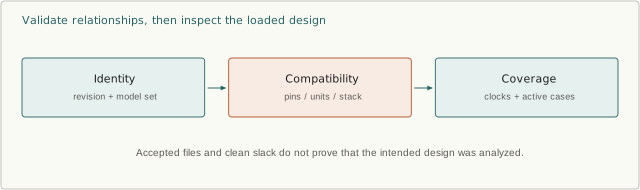
Successful import proves that the tool accepted data; clean timing proves only that the analyzed constraints passed. Neither proves that the files represent the intended chip or that all required cases were analyzed.
Technical Explanation
Consider a missing generated clock: downstream paths may never receive the intended clock-based checks. Consider an inactive slow scenario: reports can omit the operating condition that would fail. An overly broad false path can remove a difficult interface. A nominal library accidentally substituted for a slow model can make results look plausible and optimistic at the same time. Physical and power errors can also survive a timing summary. An old macro abstract can give the wrong pin geometry. A mismatched DEF can leave important objects unannotated. A power-domain strategy applied at the wrong hierarchy scope can fail to protect a shutdown boundary. These are different failure classes and need targeted evidence rather than one pass/fail badge. Debug by comparing expectations with reports: design counts, required clocks, constrained interfaces, active analysis types, library/model selection, RC assignments, macro geometry, and power-intent checks. Inspect a few representative critical paths to see the actual scenario, cells, edges, and parasitics. Reconcile unexplained changes against the last validated handoff before starting optimization.
Common Mistake
Treating 'zero violations' as a universal proof of correctness, or adjusting optimization effort before checking the problem definition.
Follow-up Question & Model Response
What is the strongest readiness evidence? A consistent package plus reproducible reports showing that the intended objects, conditions, and checks are present.
Practical Example
Yesterday the design had eight clocks; today's report lists seven and shows better timing. First investigate the missing clock and its endpoints. Do not celebrate the slack improvement until coverage is restored.
Continue practising