Static Timing Analysis Library

Static Timing Analysis (STA) Books & Guides

Three books for timing signoff: the STA Handbook for concepts, the PrimeTime Mentor Guide for Synopsys PrimeTime and the Tempus Mentor Guide for Cadence Tempus. PrimeTime and Tempus are free to read online; every book is โ‚น199 as an offline PDF. Some flows still call this analysis MCMM; pdVerse uses MMMC.

STA books: concepts, PrimeTime and Tempus

STA Handbook cover

STA Handbook

10 chapters on STA concepts, delays, crosstalk and timing verification, with interview Q&A.

Free Preview
PrimeTime Mentor Guide cover

PrimeTime Mentor Guide

17 chapters on Synopsys PrimeTime, from design data and clocks to SI, variation and the ECO flow.
Read Free
Tempus Mentor Guide cover

Tempus Mentor Guide

15 chapters on Cadence Tempus, from delay calculation, SI and AOCV/SOCV to MMMC, signoff ECO and timing models.

Read Free
Practice 139 free STA interview questions Setup/hold, slack, SDC, OCV, CRPR, crosstalk, and PrimeTime reports โ†’

STA Handbook: all 10 chapters

Chapter 01 - Introduction to STA
Chapter 01

Introduction to STA

Foundations of Static Timing Analysis โ€” why STA is critical in ASIC physical design flows vs. dynamic simulation.
  • What is STA and why it matters
  • STA vs. dynamic simulation
  • Timing paths and STA flow
  • Beginner to expert interview Q&A
Explore Chapter
Chapter 02 - STA Concepts
Chapter 02

STA Concepts

Core timing path equations โ€” launch/capture flop logic, setup and hold slack calculations, uncertainty, and latency.
  • Timing path types & analysis
  • Setup and hold equations
  • Slack calculation & report debug
  • Beginner to expert interview Q&A
Explore Chapter
Chapter 03 - Standard Cell Library
Chapter 03

Standard Cell Library

Standard cell characterization, library timing models, cell delay lookup tables, and library timing arcs.
  • Cell delay & transition models
  • Library timing arcs & derating
  • Wireload models & parasitics
  • Beginner to expert interview Q&A
Explore Chapter
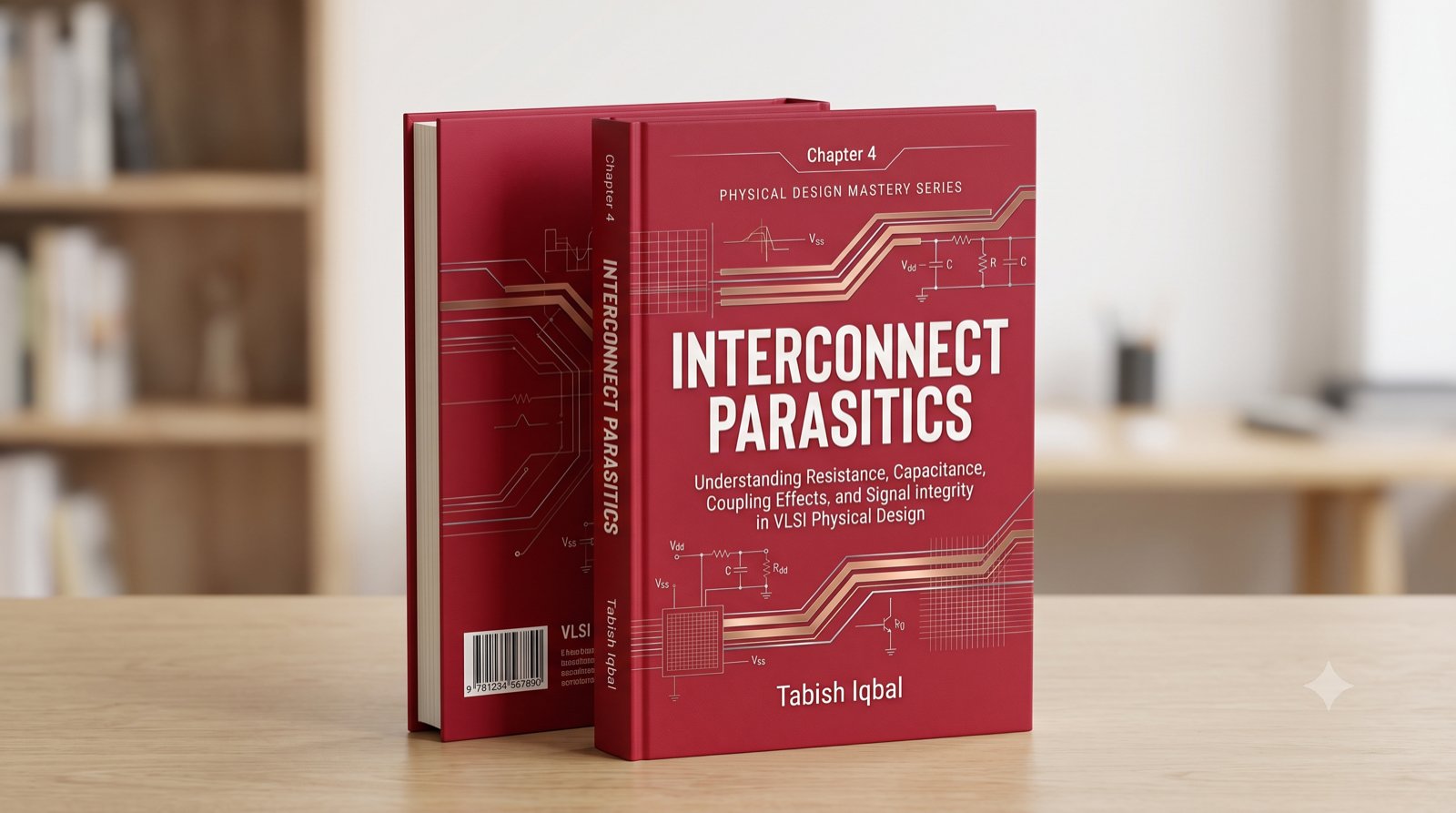
Chapter 04 - Interconnect Parasitics
Chapter 04

Interconnect Parasitics

Understanding interconnect resistance and capacitance โ€” RC extraction, net delay modeling, and parasitic reduction.
  • RC delay extraction models
  • Net resistance & capacitance
  • Interconnect coupling effects
  • Beginner to expert interview Q&A
Explore Chapter
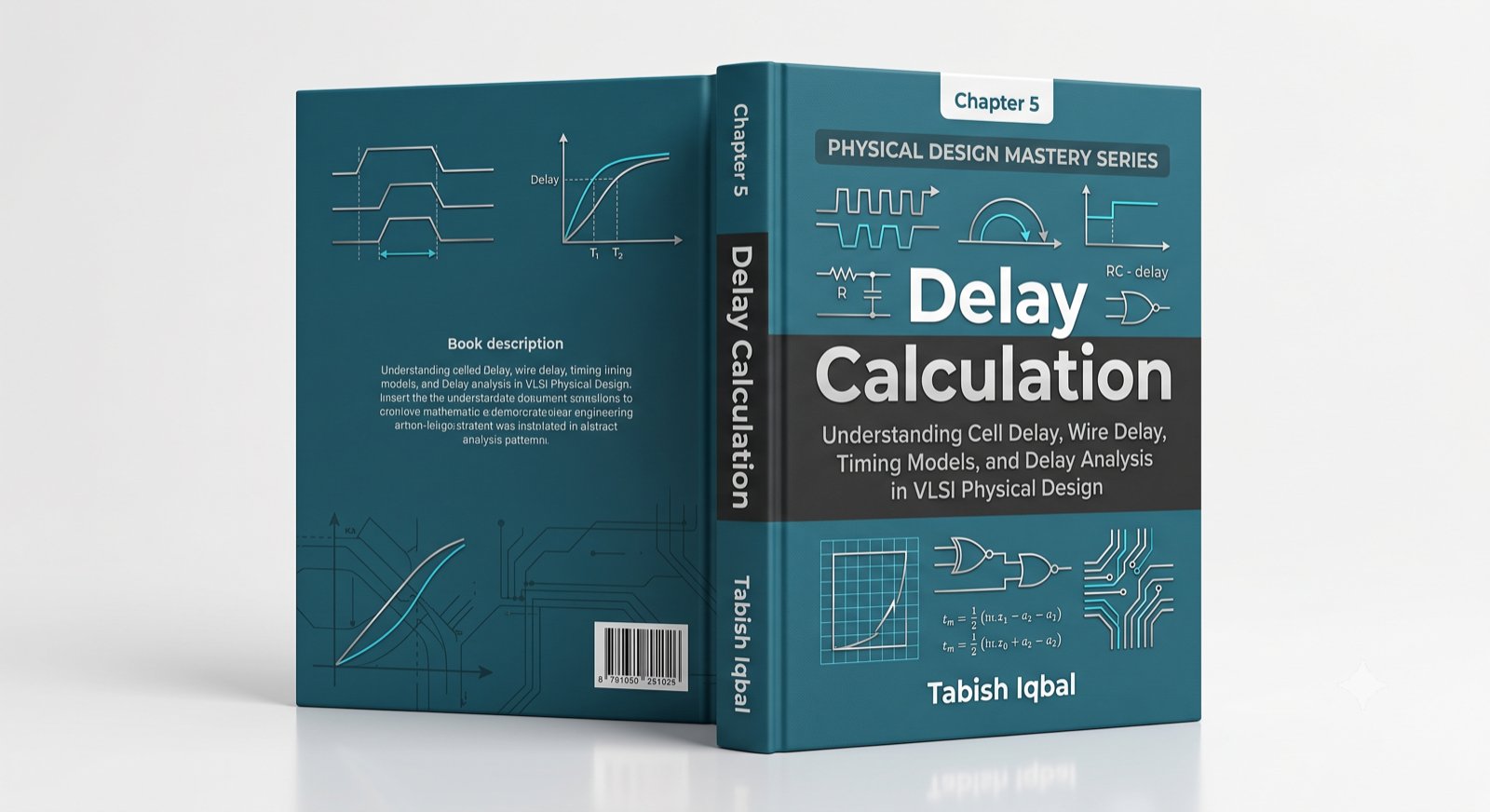
Chapter 05 - Delay Calculation
Chapter 05

Delay Calculation

Detailed path delay calculation methods โ€” NLDM vs CCS models, net delays, slew propagation, and corner computation.
  • Cell delay (NLDM, CCS, ECSM)
  • Net delay & Elmore RC models
  • Transition time propagation
  • Beginner to expert interview Q&A
Explore Chapter
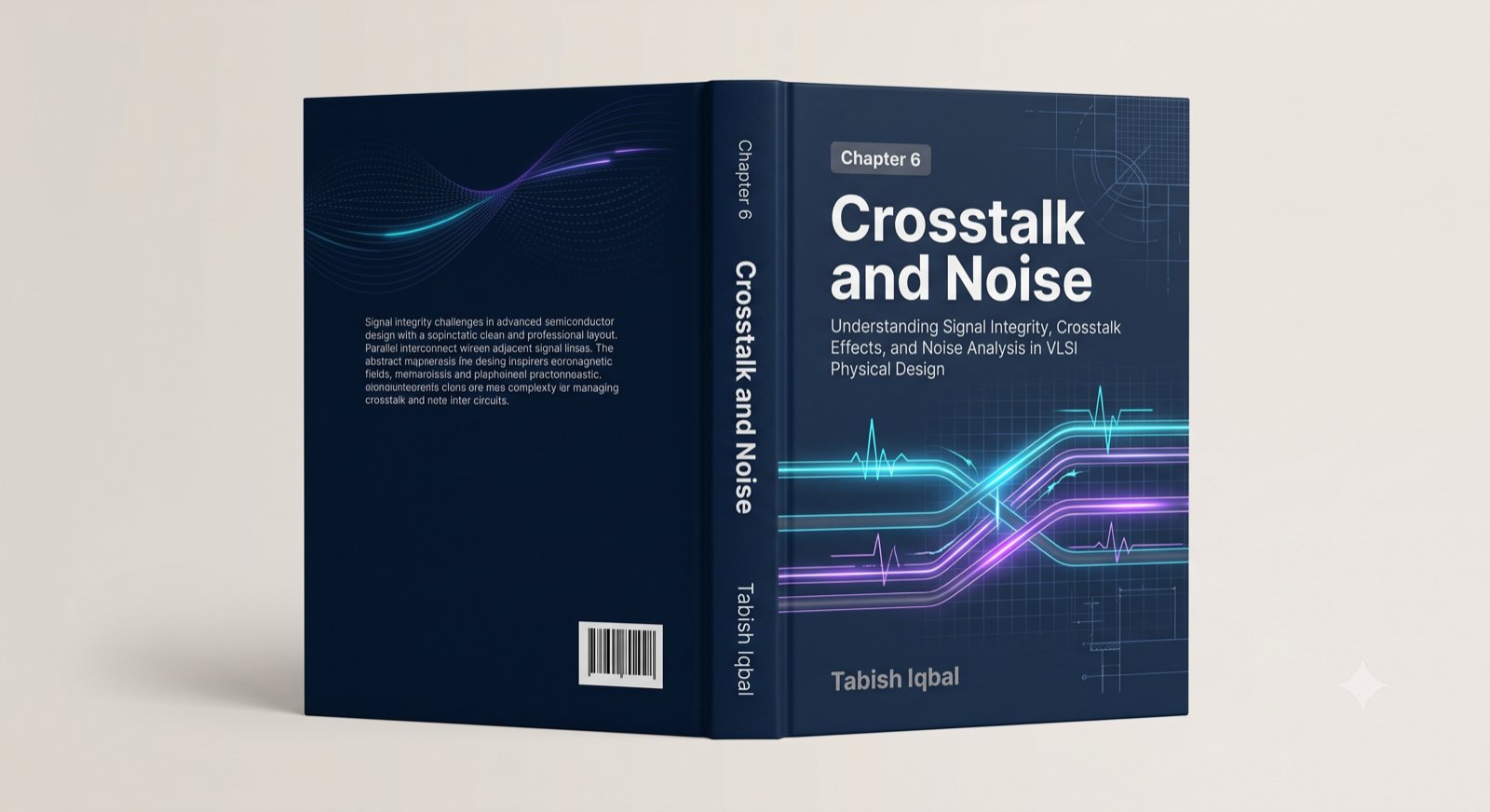
Chapter 06 - Crosstalk and Noise
Chapter 06

Crosstalk and Noise

Crosstalk delay and noise glitch analysis โ€” aggressor-victim coupling, glitch propagation filtering, and SI closure.
  • Crosstalk delay & noise glitch
  • Aggressor-victim coupling
  • Signal integrity (SI) signoff
  • Beginner to expert interview Q&A
Explore Chapter
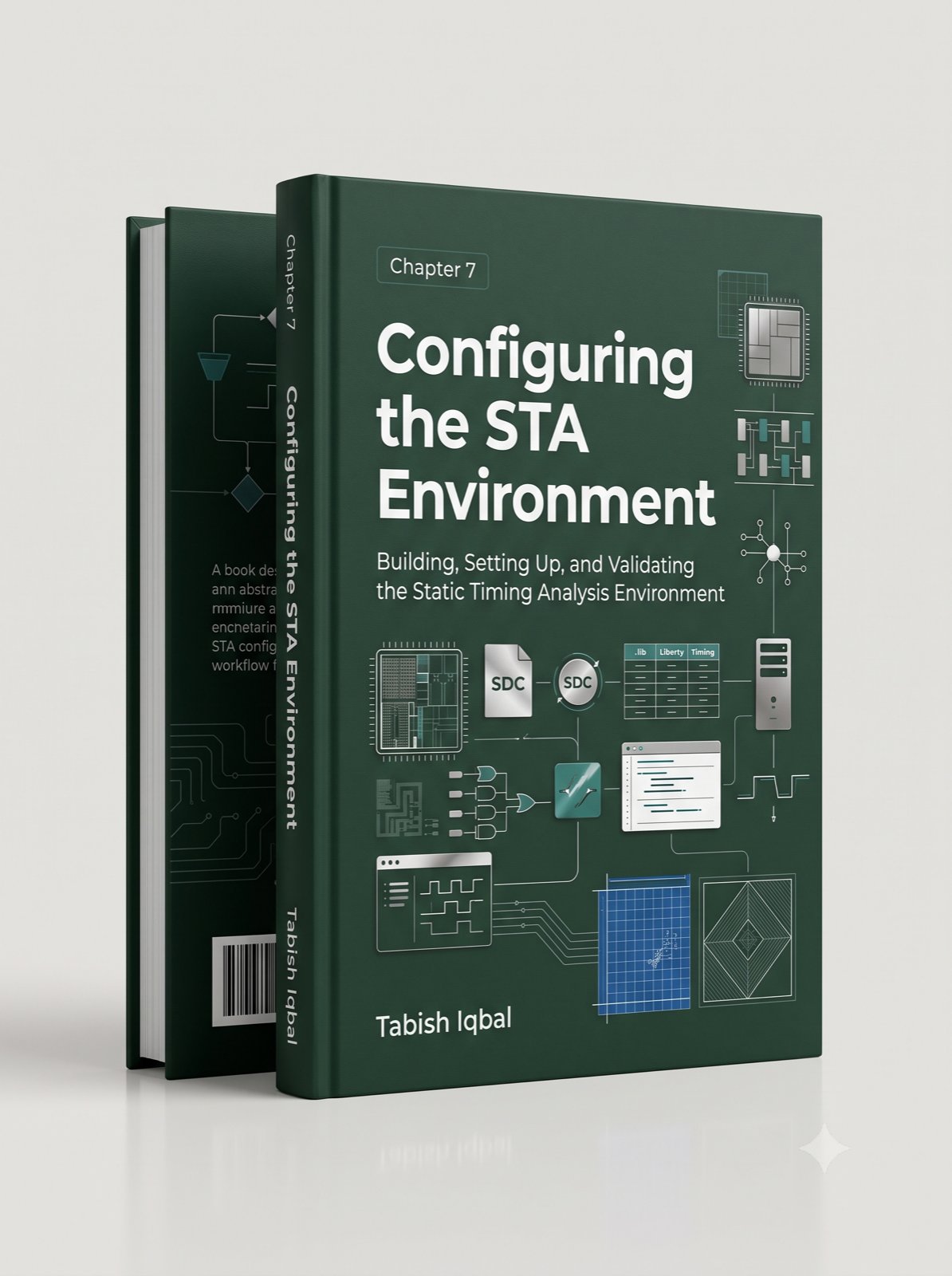
Chapter 07 - Configuring STA Environment
Chapter 07

Configuring STA Environment

Setting up PrimeTime environment โ€” reading netlists, specifying libraries, applying SDC constraints, and initial runs.
  • Design read and link flow
  • Library & corner setup
  • Applying constraints in tools
  • Beginner to expert interview Q&A
Explore Chapter
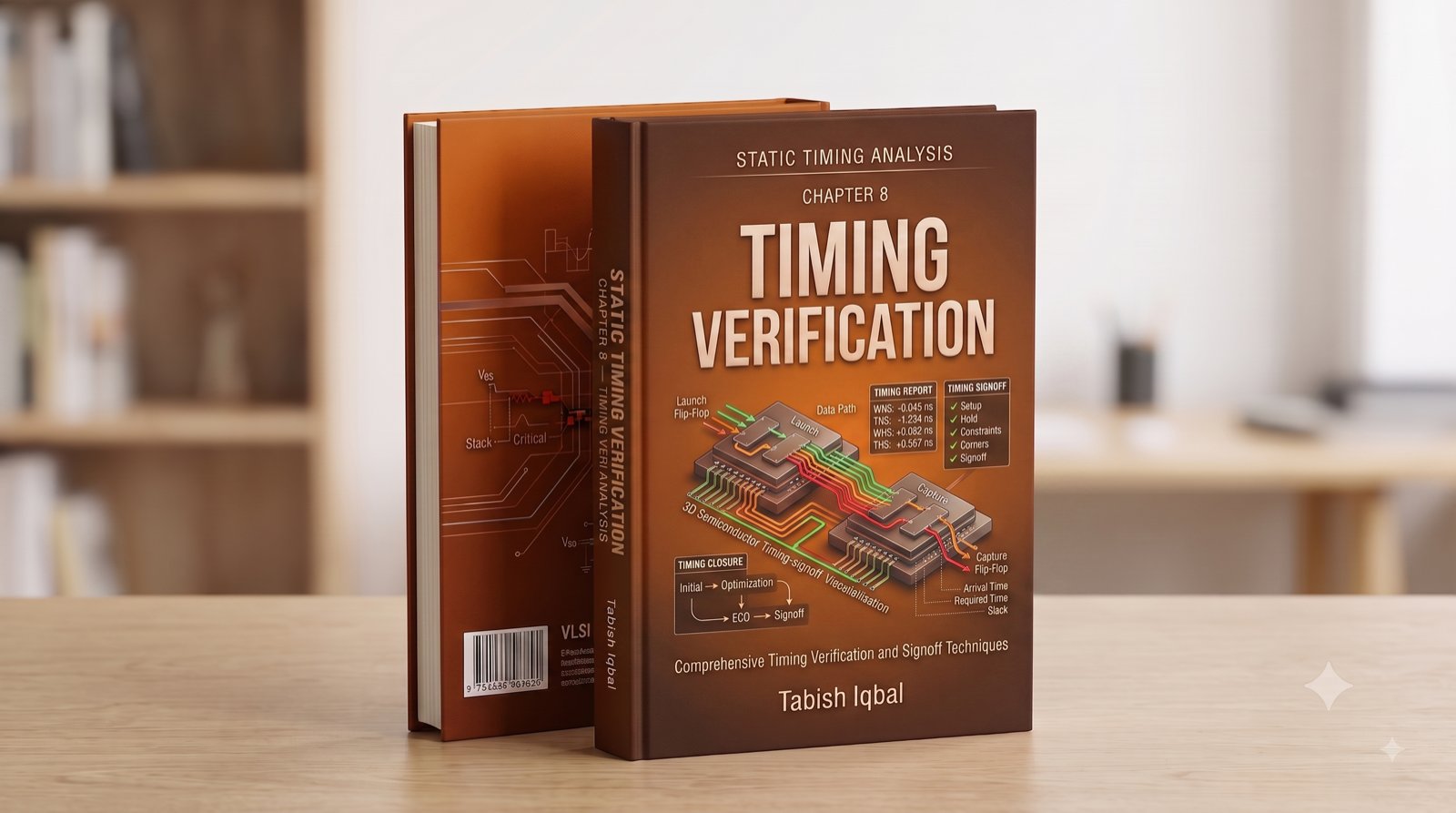
Chapter 08 - Timing Verification
Chapter 08

Timing Verification

Comprehensive timing verification โ€” report interpretation, constraint validation, timing closure, and signoff methodology.
  • PrimeTime report analysis
  • Constraint validation checks
  • Timing closure strategies
  • Beginner to expert interview Q&A
Explore Chapter
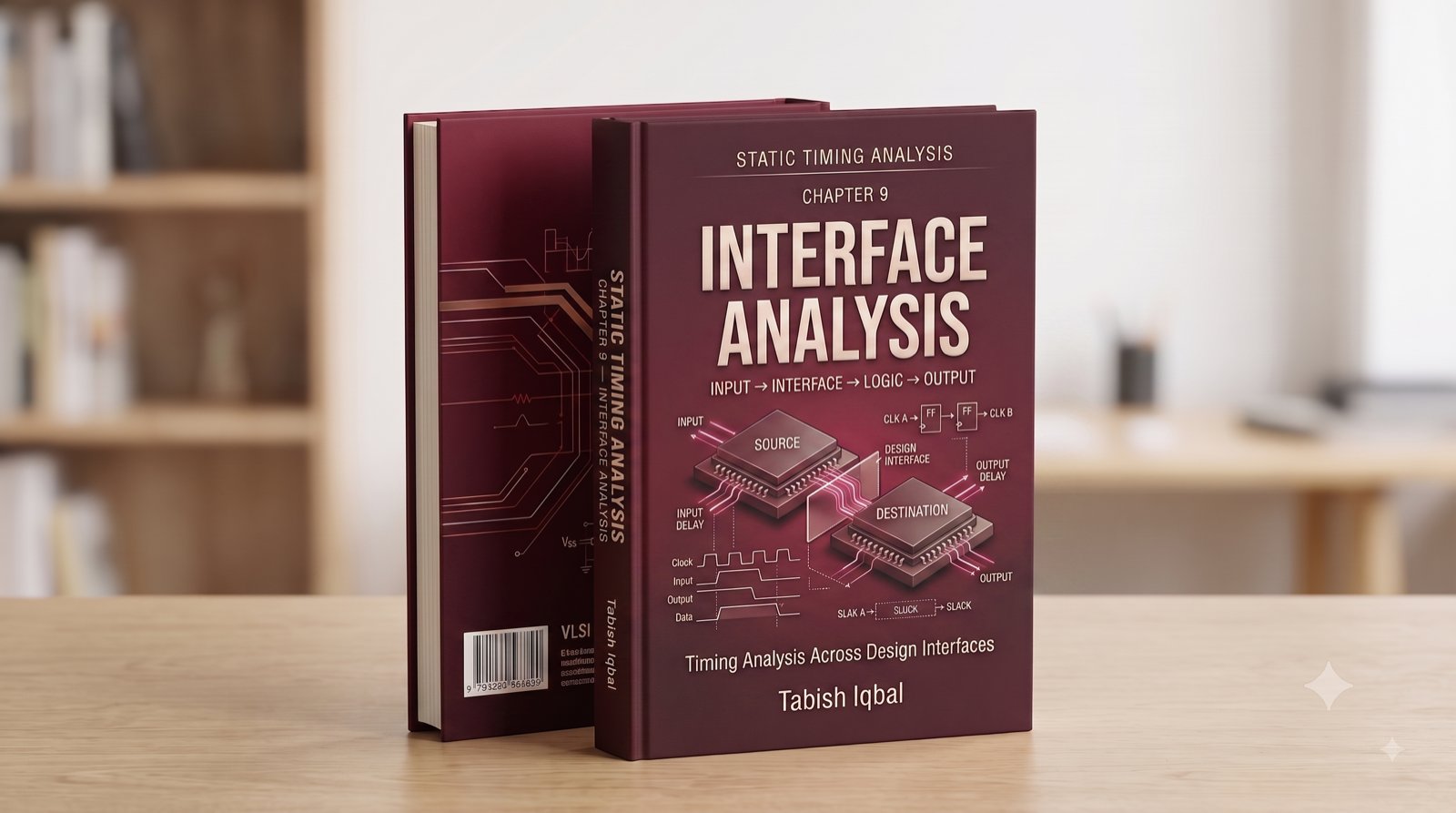
Chapter 09 - Interface Analysis
Chapter 09

Interface Analysis

Timing analysis across interfaces โ€” I/O delays, boundary path constraints, synchronization, and multi-clock domains.
  • I/O interface timing models
  • Clock domain crossing (CDC)
  • Boundary path constraints
  • Beginner to expert interview Q&A
Explore Chapter
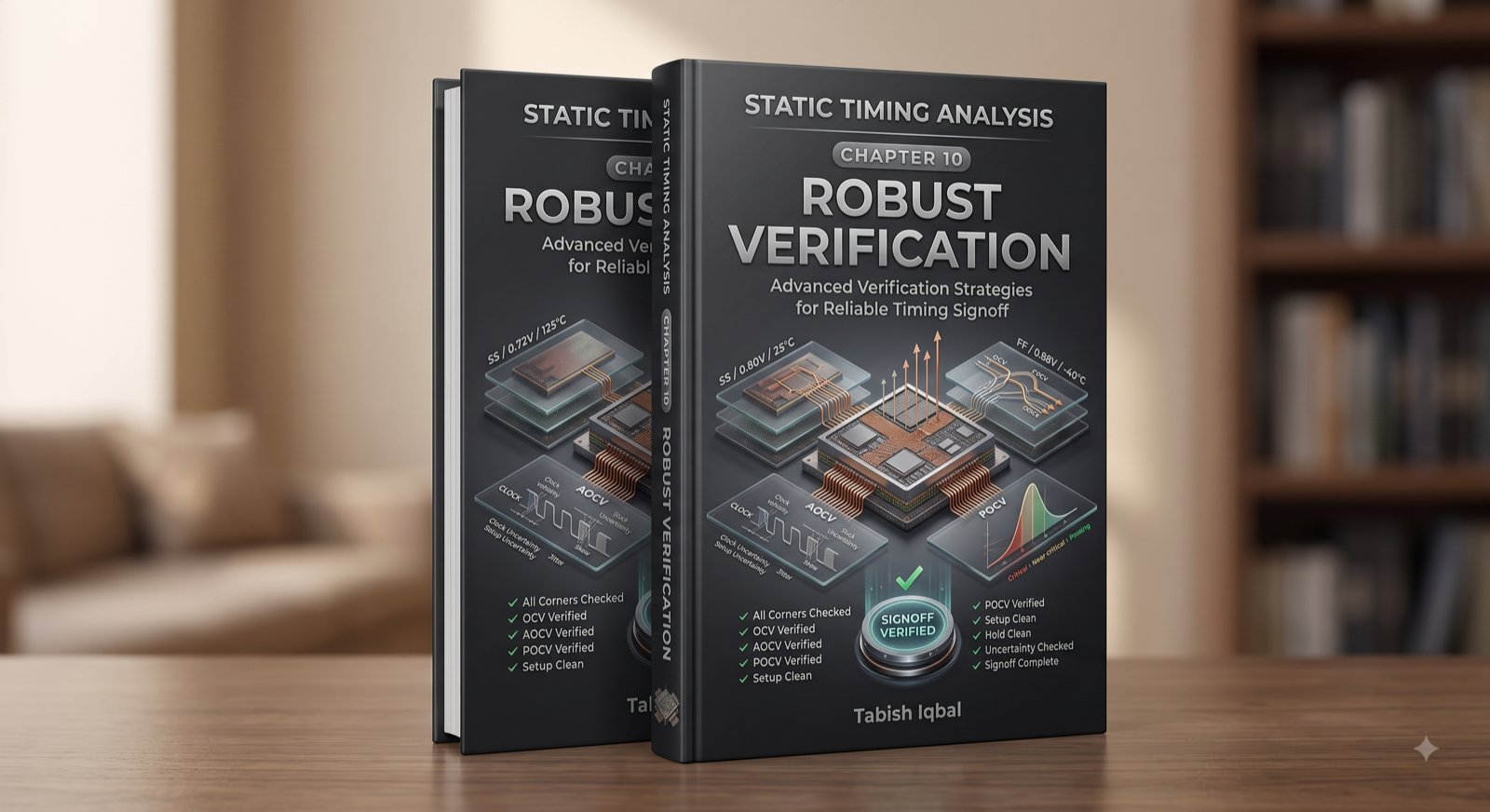
Chapter 10 - Robust Verification
Chapter 10

Robust Verification

Advanced signoff methodologies โ€” Statistical STA (SSTA), On-Chip Variation (OCV/AOCV/SOCV), and timing margin derates.

  • Statistical STA (SSTA) basics
  • OCV, AOCV, SOCV modeling
  • Signoff timing margins
  • Beginner to expert interview Q&A
Explore Chapter

Deep Signoff Curriculum

Static Timing Analysis Signoff Curriculum & Methodology

Static Timing Analysis (STA) is the definitive signoff methodology for digital ASIC and SoC designs. Unlike dynamic simulation which only exercises testbench vectors, STA mathematically proves that every register-to-register, input-to-register, and register-to-output path satisfies setup, hold, recovery, removal, and minimum pulse width requirements across all PVT corners and operating modes.

๐Ÿ”ฌ What This Collection Covers

  • Liberty Library Modeling: Non-Linear Delay Models (NLDM) and Composite Current Source (CCS) lookup tables for cell delay, output transition, setup/hold constraints, and power.
  • Interconnect Parasitics & SPEF: Distributed RC networks, Elmore delay calculation, reduction methods, and SPEF back-annotation.
  • Variation Modeling: On-Chip Variation (OCV), Advanced OCV (AOCV) bounding distance tables, and Parametric OCV (POCV) normal distributions.
  • Signal Integrity & Crosstalk: Coupling capacitance, glitch hazards, timing window overlap, and delta delay adjustments.

๐Ÿ› ๏ธ Who This Handbook Is For

  • Physical Design Engineers: Closing setup and hold violations, budgeting clock uncertainty, and executing timing-driven placement and CTS optimization.
  • STA Signoff Leads: Building signoff runscripts in Synopsys PrimeTime or Cadence Tempus, validating constraint coverage, and justifying timing waivers for tapeout.
  • Interview Candidates: Master technical interview questions on slack arithmetic, CRPR/CPPR mechanisms, clock skew, and multi-corner debugging.
  • RTL & Synthesis Engineers: Understanding synthesis timing constraints, logic depth, and clock domain crossing budgeting.

๐ŸŽฏ What's Included in the 10-Chapter Bundle

Every chapter is provided as a DRM-free high-resolution PDF with visual circuit diagrams, tool command references (Synopsys PrimeTime syntax), and curated beginner-to-expert interview questions with verified mentor answers. Get all 10 chapters together in the complete bundle for โ‚น199.

Explore All 8 Collections (โ‚น1,237) โ†’